Loading...
Searching...
No Matches
tf_mesh_create.h File Reference
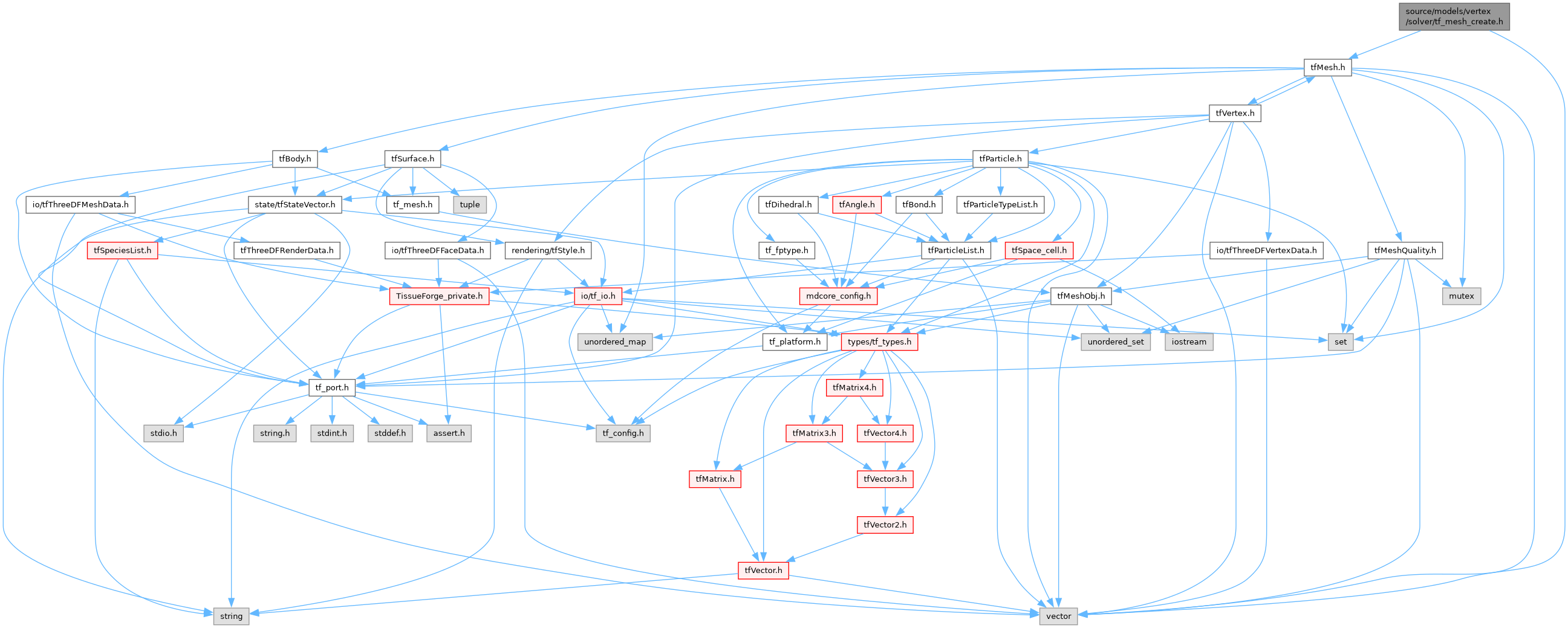
Include dependency graph for tf_mesh_create.h:
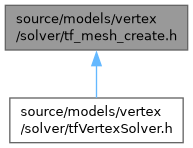
This graph shows which files directly or indirectly include this file:
Go to the source code of this file.
Namespaces | |
| namespace | TissueForge |
| Include Python header, disable linking to pythonX_d.lib on Windows in debug mode. | |
| namespace | TissueForge::models |
| Application-specific Tissue Forge models and methods. | |
Functions | |
| std::vector< std::vector< SurfaceHandle > > | TissueForge::models::vertex::createQuadMesh (SurfaceType *stype, const FVector3 &startPos, const unsigned int &num_1, const unsigned int &num_2, const FloatP_t &len_1, const FloatP_t &len_2, const char *ax_1="x", const char *ax_2="y") |
| Populate the mesh with quadrilateral surfaces. | |
| std::vector< std::vector< std::vector< BodyHandle > > > | TissueForge::models::vertex::createPLPDMesh (BodyType *btype, SurfaceType *stype, const FVector3 &startPos, const unsigned int &num_1, const unsigned int &num_2, const unsigned int &num_3, const FloatP_t &len_1, const FloatP_t &len_2, const FloatP_t &len_3, const char *ax_1="x", const char *ax_2="y") |
| Populate the mesh with parallelepiped bodies. | |
| std::vector< std::vector< SurfaceHandle > > | TissueForge::models::vertex::createHex2DMesh (SurfaceType *stype, const FVector3 &startPos, const unsigned int &num_1, const unsigned int &num_2, const FloatP_t &hexRad, const char *ax_1="x", const char *ax_2="y") |
| Populate the mesh with hexagonal surfaces. | |
| std::vector< std::vector< std::vector< BodyHandle > > > | TissueForge::models::vertex::createHex3DMesh (BodyType *btype, SurfaceType *stype, const FVector3 &startPos, const unsigned int &num_1, const unsigned int &num_2, const unsigned int &num_3, const FloatP_t &hexRad, const FloatP_t &hex_height, const char *ax_1="x", const char *ax_2="y") |
| Populate the mesh with bodies from extruded hexagonal surfaces. | |
Function Documentation
◆ createHex2DMesh()
| std::vector< std::vector< SurfaceHandle > > TissueForge::models::vertex::createHex2DMesh | ( | SurfaceType * | stype, |
| const FVector3 & | startPos, | ||
| const unsigned int & | num_1, | ||
| const unsigned int & | num_2, | ||
| const FloatP_t & | hexRad, | ||
| const char * | ax_1 = "x", | ||
| const char * | ax_2 = "y" ) |
Populate the mesh with hexagonal surfaces.
Requires an initialized solver.
- Parameters
-
stype surface type startPos starting position num_1 number of elements in the first direction num_2 number of elements in the second direction hexRad radius of hexagon vertices ax_1 axis name of the first direction (e.g., "x") ax_2 axis name of the second direction
- Returns
- constructed surfaces
◆ createHex3DMesh()
| std::vector< std::vector< std::vector< BodyHandle > > > TissueForge::models::vertex::createHex3DMesh | ( | BodyType * | btype, |
| SurfaceType * | stype, | ||
| const FVector3 & | startPos, | ||
| const unsigned int & | num_1, | ||
| const unsigned int & | num_2, | ||
| const unsigned int & | num_3, | ||
| const FloatP_t & | hexRad, | ||
| const FloatP_t & | hex_height, | ||
| const char * | ax_1 = "x", | ||
| const char * | ax_2 = "y" ) |
Populate the mesh with bodies from extruded hexagonal surfaces.
Requires an initialized solver.
Surfaces are placed in the plane of the first and second directions, and extruded along the third direction.
- Parameters
-
btype body type stype surface type startPos starting position num_1 number of elements in the first direction num_2 number of elements in the second direction num_3 number of elements in the third directionnumber of elements in the third direction hexRad radius of hexagon vertices hex_height extrusion length per body ax_1 axis name of the first direction (e.g., "x") ax_2 axis name of the second direction
- Returns
- constructed bodies
◆ createPLPDMesh()
| std::vector< std::vector< std::vector< BodyHandle > > > TissueForge::models::vertex::createPLPDMesh | ( | BodyType * | btype, |
| SurfaceType * | stype, | ||
| const FVector3 & | startPos, | ||
| const unsigned int & | num_1, | ||
| const unsigned int & | num_2, | ||
| const unsigned int & | num_3, | ||
| const FloatP_t & | len_1, | ||
| const FloatP_t & | len_2, | ||
| const FloatP_t & | len_3, | ||
| const char * | ax_1 = "x", | ||
| const char * | ax_2 = "y" ) |
Populate the mesh with parallelepiped bodies.
Requires an initialized solver.
- Parameters
-
btype body type stype surface type startPos starting position num_1 number of elements in the first direction num_2 number of elements in the second direction num_3 number of elements in the third direction len_1 length of each element in the first direction len_2 length of each element in the second direction len_3 length of each element in the third direction ax_1 axis name of the first direction (e.g., "x") ax_2 axis name of the second direction
- Returns
- constructed bodies
◆ createQuadMesh()
| std::vector< std::vector< SurfaceHandle > > TissueForge::models::vertex::createQuadMesh | ( | SurfaceType * | stype, |
| const FVector3 & | startPos, | ||
| const unsigned int & | num_1, | ||
| const unsigned int & | num_2, | ||
| const FloatP_t & | len_1, | ||
| const FloatP_t & | len_2, | ||
| const char * | ax_1 = "x", | ||
| const char * | ax_2 = "y" ) |
Populate the mesh with quadrilateral surfaces.
Requires an initialized solver.
- Parameters
-
stype surface type startPos starting position num_1 number of elements in the first direction num_2 number of elements in the second direction len_1 length of each element in the first direction len_2 length of each element in the second direction ax_1 axis name of the first direction (e.g., "x") ax_2 axis name of the second direction
- Returns
- constructed surfaces